




240-Trillion-VND Mega Project Launches: A Historic Boost for Southern Vietnam’s Real Estate at the Start of 2026

In the early days of January 2026, the market has witnessed an unprecedented urgency as Ho Chi Minh City and neighboring provinces concurrently focus resources on key infrastructure projects. With a total capital of 240 trillion VND being activated, the real estate landscape in Southern Vietnam stands before an opportunity to establish a new value benchmark, yet it also harbors underlying “undercurrents” that require investor caution.
Macro Context: When “Shelter” Capital Seeks Real Value
Entering 2026, the global economy is gradually stabilizing after a period of interest rate fluctuations. In Vietnam, well-controlled inflation and the State Bank’s early-year credit room easing have created positive momentum.
Unlike the speculative period of 2020-2022, real estate investment capital in 2026 is no longer flowing into “paper” projects. Instead, it closely follows the disbursement progress of public investment. The narrative of “land prices rising wherever new roads reach” is returning, but with stricter market filtering.
“Four Pillar” Infrastructure Projects Activate: A New Landscape for Ho Chi Minh City Real Estate
According to field observations over the past 10 days, four strategic transportation infrastructure projects are generating a heating effect across the Ho Chi Minh City real estate market and its vicinity:
-
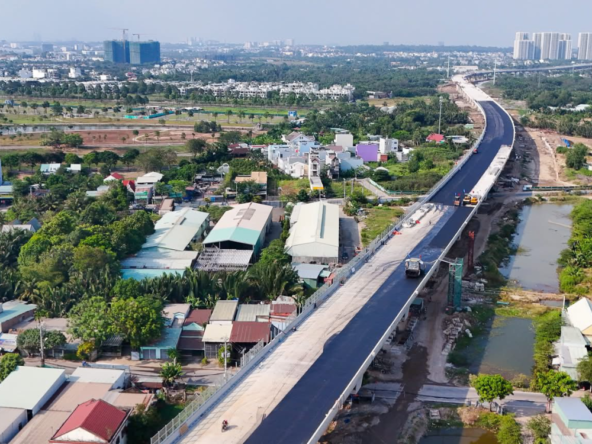
Ho Chi Minh City Ring Road 3 (Final Sprint Phase): Key construction packages are accelerating asphalt paving progress to meet the technical opening deadlines for some sections. This directly impacts land prices in Thu Duc City, Cu Chi, and Hoc Mon districts.
-
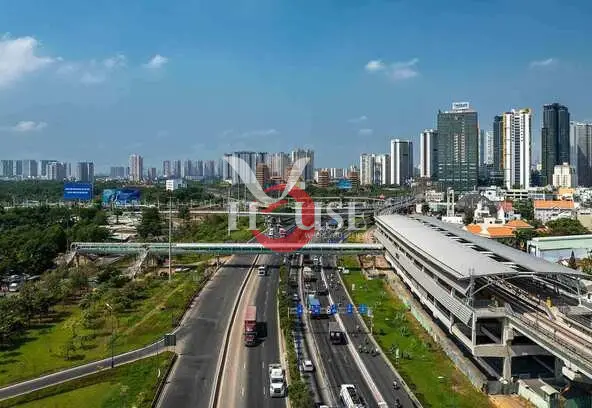
Metro Line 2 (Ben Thanh – Tham Luong): The official groundbreaking of crucial underground stations in mid-January 2026 has awakened the potential of real estate along the axis of Cach Mang Thang Tam and Truong Chinh streets.
-
HCMC – Moc Bai Expressway: Intensive site clearance activities have caused the Northwest HCMC (Cu Chi) and Tay Ninh markets to begin stirring with price increases.
-
Inter-regional Bridges (Cat Lai Bridge, Phu My Bridge 2): Finalized decisions on design plans and investment capital are reigniting interest in the Nhon Trach (Dong Nai) and Nha Be areas.

Direct Impact on the Southern Real Estate Market
The synergistic effect of these projects is redrawing the value map of Southern real estate:
-
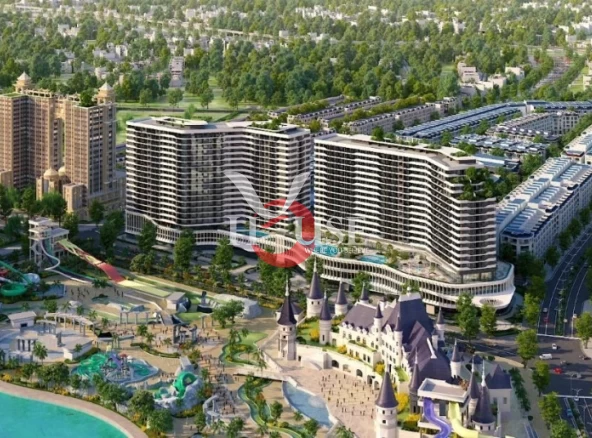
The Eastern Area (Thu Duc City): Remains the “heart” of the market. With maturing infrastructure, real estate activities here are shifting strongly towards the high-end apartment and office segments, with prices establishing a range of 80 – 150 million VND/m².
-
Satellite Markets (Long An, Dong Nai): Benefiting from Ring Road 3 and expressways, Southern real estate in areas like Ben Luc (Long An) and Nhon Trach (Dong Nai) is attracting capital flows seeking affordable land plots and industrial park properties.
Expert Perspective: Growth Opportunities and “Price Trap” Risks
From VHouse Vietnam’s in-depth analytical perspective, 2026 opens many opportunities, but not for the uninformed majority.
1. Growth Potential (Positive):
Forecasts for Q1 and Q2 2026 suggest property prices in Southern areas where infrastructure is under actual construction (not just on-planning papers) could see 10-15% growth. This represents a sustainable increase, accurately reflecting the utility value added by the infrastructure.
2. Potential Risks (Negative/Risk Analysis):
However, investors must be extremely vigilant against “following the crowd” scenarios.
-
Artificial Price Traps: Leveraging groundbreaking news, speculative groups may inflate land prices in outlying areas to levels excessively high (30-40% above) their actual value, while social infrastructure (schools, hospitals, markets) lags behind. Buying at this peak carries a high risk of “frozen capital” for 3-5 years.
-
Legal Risks: Although the new Land Law is in effect, land-use purpose conversions in areas adjacent to major projects remain tightly controlled. Trading in Southern real estate within the agricultural land or land-awaiting-planning segments carries extremely high legal risks without thorough verification of the detailed 1/500 construction plan.

Conclusion
January 2026 is a “golden” time to observe and restructure investment portfolios. The keywords Southern real estate are certain to dominate media coverage throughout the year.
Advice from VHouse Vietnam: Prioritize properties with clear legal status (“Pink Book in hand”), located within a 3-5km radius of major infrastructure interchanges. Don’t just focus on projected profits; consider the asset’s liquidity potential during market fluctuations.
Find information on real estate investments in Vietnam. Click here.